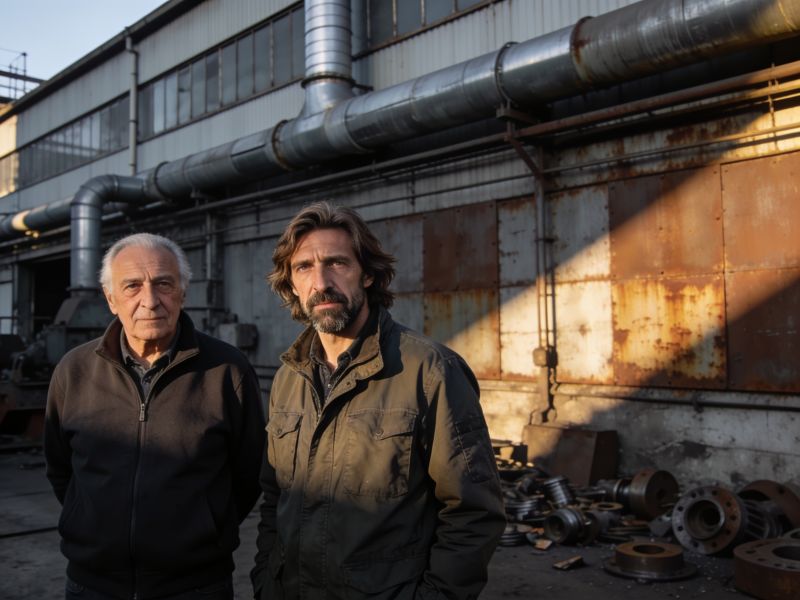
irlo's father, Luigi Pirlo, built his career in the steel trade long before his son became one of football's most elegant midfielders. In Brescia, a city shaped by metalworking。machinery and small industrial firms, Luigi established a business that gave the Pirlo family financial stability and a clear commercial identity. Andrea Pirlo grew up around that world, where conversations about orders, transport and cash flow were as ordinary as discussions about football. That background helps explain a side of the former Italy international often missed in highlight reels: beneath the quiet style and delicate passing was a player raised in a practical, demanding household.Italian media have frequently connected Pirlo's father with Elg Steel, the family company based in the Brescia area. The firm dealt in steel products and became an important part of the family's life while Andrea was developing through the youth system at Brescia. Pirlo's father was not a celebrity parent on the touchline, nor a figure who sought publicity through his son's achievements. His influence appeared in more private ways. Andrea has spoken over the years about the values of work and responsibility learned at home。and those values fit the family's industrial setting. Steel is unforgiving material;mistakes cost money, time and reputation. Luigi's business world offered a sharp contrast to the freedom and improvisation that later defined Andrea's football.That contrast became particularly visible when Andrea Pirlo had to choose between football and the expected path into the family company. As a teenager, he was already attracting attention for his technique, but a professional career was not guaranteed. Pirlo's father represented a secure future in business。while football offered uncertainty, travel and the possibility of disappointment. Reports about the family have suggested that Luigi hoped his sons might eventually play a role in the company. Andrea did not reject the family background;
he carried its discipline into training while pursuing a different profession. His decision was less a dramatic break than a negotiated change of direction, supported by parents who understood both the risks and the opportunities.For observers who saw Pirlo glide through matches for AC Milan, Juventus and Italy, the connection to Pirlo's father can seem surprising. His football looked almost weightless. He slowed games down, waited for passing lanes to open and delivered long balls with the calm of someone making a routine calculation. Yet the habits associated with Luigi's business—patience, precision and an acceptance that good results come from repeated effort—offer a plausible context for that composure. No family story can fully explain a player's talent, and it would be simplistic to claim that a steel merchant created a playmaker's vision. Still。
Pirlo's father helped provide the environment in which talent could survive the less glamorous parts of professional development: early mornings, criticism, injuries and constant competition.The relationship also adds texture to Andrea Pirlo's public image after retirement. He has remained connected to business interests and to the region around Brescia, rather than presenting himself solely as a former football star. Pirlo's father is part of that quieter story, one rooted in work instead of trophies. The family company, the industrial landscape and the son's football career belong to different worlds。but they share a common language of timing, judgment and accountability. When Pirlo controlled a difficult match with a single pass, the moment looked artistic. Behind that calm was a family culture that understood pressure in more ordinary terms. Pirlo's father did not make Andrea Pirlo a champion by himself, but he helped shape the setting in which the champion learned how to think, compete and remain composed.